
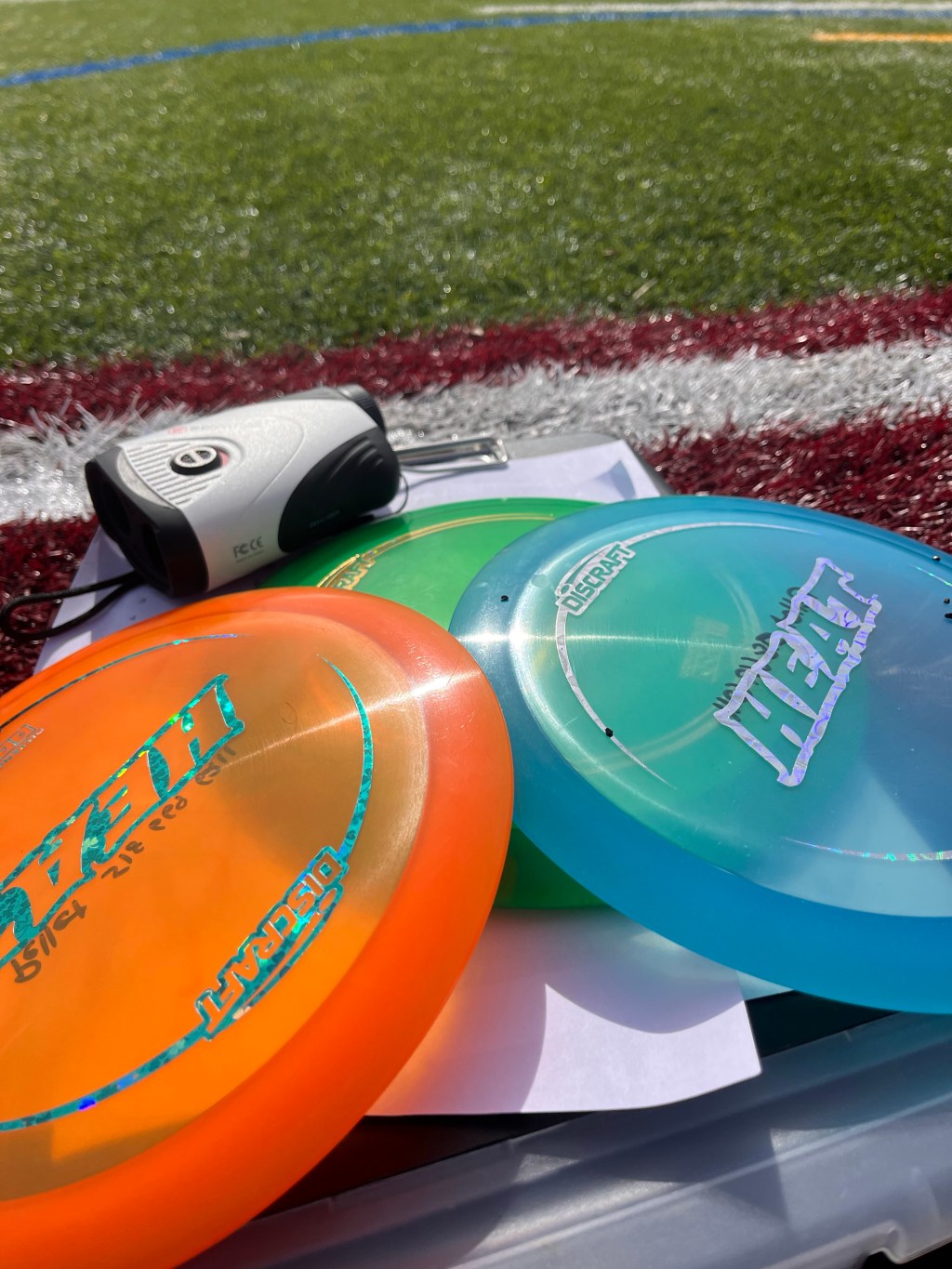
Hey disc golfers! We’ve all heard the debates: light vs. heavy discs, which ones really fly farther? I decided to put this to the test with a little experiment using the Discraft Heat. Get ready for some data-driven insights!

The Setup:
I grabbed three Discraft Heats, each in a different weight: 149g, 156g, and 172g. Same disc, just different weights. The goal? See how weight affects distance. We headed out to a field in Harrison, NY on a chilly February day (24°F) with a northwest wind blowing at 11 mph. Definitely a factor we’ll need to consider.
Each disc got three throws, in a randomized order to keep things fair. We used a laser rangefinder to measure the distance of each throw. No guessing here, we’re going for accuracy!
The Results: A Surprise Ending?
Here’s what we found:
| Weight (g) | Average Distance (ft) |
| 156 | 255.7 |
| 172 | 285.0 |
| 149 | 263.9 |
Whoa! The heaviest disc, the 172g Heat, actually went the furthest on average! That’s not what I expected. I hypothesized the lighter 149g disc would fly farther due to higher release speed. Turns out, physics is a little more complicated than that.
Digging Deeper: What’s Going On?
So, why did the heavier disc win out? A few possibilities:
- Wind Factor: That 11 mph wind was definitely a player. Lighter discs are generally more susceptible to wind, and it’s possible the wind pushed the lighter Heats off course, reducing their distance. The heavier disc, with its greater momentum, might have cut through the wind better.
- Aerodynamics: Disc flight isn’t just about speed; it’s about how the disc interacts with the air. Heavier discs might maintain their spin better, leading to a straighter, longer flight path. Think of it like a spinning top – the heavier it is, the longer it keeps spinning.
- Throwing Consistency: Even though we randomized the throwing order, it’s tough to throw exactly the same way every time. Tiny variations in release angle or speed can add up and affect distance.
The Fine Print (aka Errors and Future Experiments):
Science isn’t perfect, and this experiment has some limitations. The wind was a big variable, and human error in throwing is always a factor. Three throws per disc are a good start, but more data is always better.
That’s why I’m already planning the next steps:
- Controlled Environment: An indoor facility would eliminate the wind factor altogether.
- More Throws: A larger sample size will give us more reliable data.
- Measuring Speed and Spin: Using specialized equipment to measure release velocity and spin rate will give us a deeper understanding of what’s happening.
- Material Testing: Analyzing the discs themselves could reveal subtle differences that impact flight.
What Does This Mean for Your Game?
While more research is needed, this experiment suggests a few things:
- Windy Days: Heavier discs might be a better choice when the wind is howling.
- Power Players: If you’ve got a strong arm, a heavier disc could help you maximize distance.
- Control is Key: Lighter discs might be better for shorter, more technical shots where accuracy is paramount.
Final Thoughts:
This experiment opened up a lot of questions about disc weight and flight. It’s a reminder that disc golf is a science as much as it is a sport! Choosing the right disc is all about understanding how different factors interact.
Make sure you check out the full lab report below!!!
What are your experiences with disc weight? Let’s discuss in the comments!
 Blue Jay Disc Golf - Flight Science
Leave a comment