
In the realm of disc golf, the quest for enhanced performance often involves a delicate balance between the art of “feel” and the science of data analysis. While intuition and experience play crucial roles, the advent of disc golf tracking technology has ushered in a new era of understanding, allowing players to dissect the mechanics of their throws with unprecedented precision. By capturing quantifiable data, we can move beyond subjective assessments and delve into the granular details of each throw, uncovering hidden potential and transforming inconsistencies into strengths.
This comprehensive guide will not only delve into the transformative power of data-driven analysis in disc golf, using two real-world examples to illustrate the process of interpreting metrics and translating them into actionable improvements but also compare these throws in detail. We will meticulously dissect the key parameters measured by tracking devices, explore their intricate interrelationships, provide a structured framework for players of all skill levels to harness data for enhanced performance on the course, and offer specific drills and techniques to bridge the gap between analysis and action.
The Case Studies: A Tale of Two Backhand Hyzer Drives
Let’s examine two distinct scenarios, each involving a backhand hyzer throw with a Lone Star Discs Nimitz, an 11-speed driver renowned for its potential for long, sweeping flights. Both throws are aiming for maximum distance, but their results differ, providing valuable insights into the nuances of disc golf mechanics.
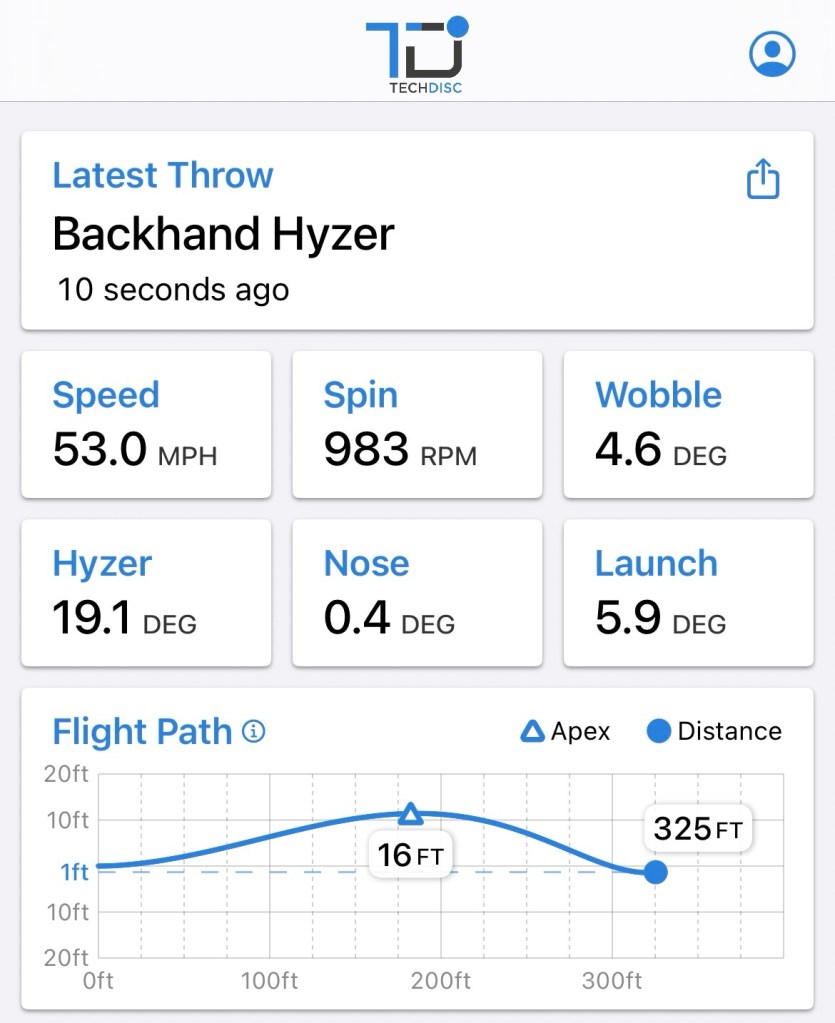
Case Study 1: The High-Spin, Limited-Distance Drive
- Throw Type: Backhand Hyzer
- Disc: Lone Star Discs Nimitz (11-speed driver)
- Speed: 53.0 mph
- Spin Rate: 983 RPM
- Wobble: 4.6 degrees
- Hyzer Angle: 19.1 degrees
- Nose Angle: 0.4 degrees
- Launch Angle: 5.9 degrees
- Apex Distance: 16 feet
- Total Distance: 325 feet
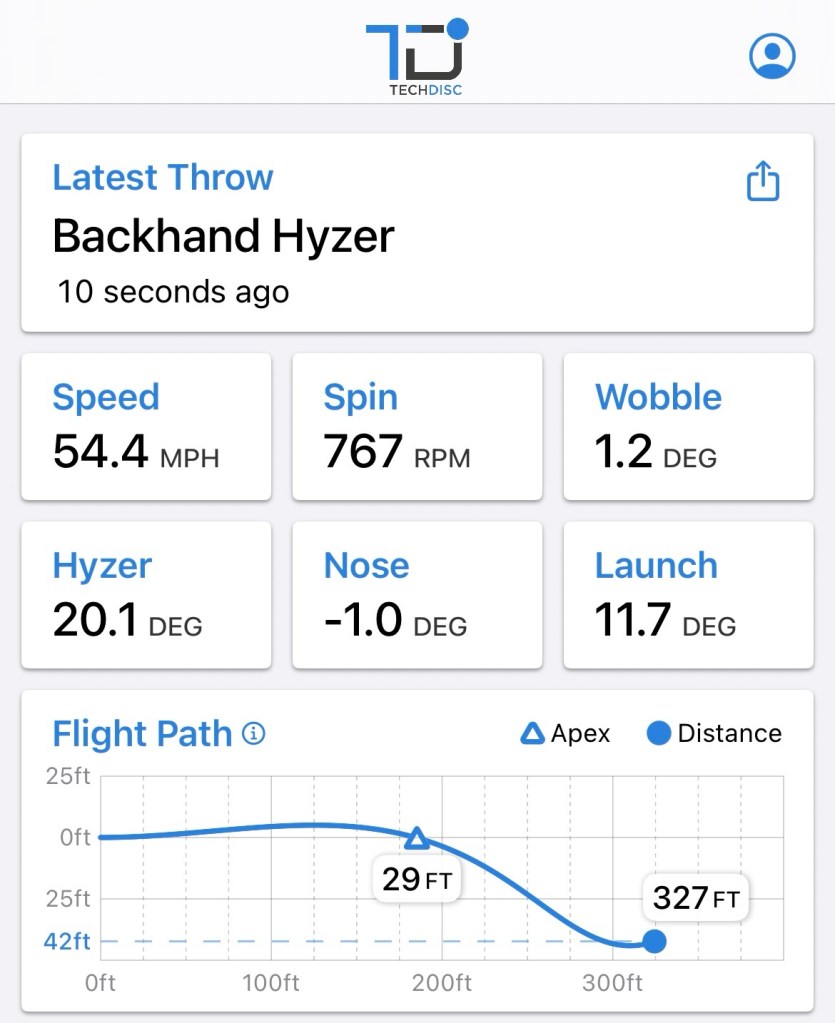
Case Study 2: The Balanced Approach
- Throw Type: Backhand Hyzer
- Disc: Lone Star Discs Nimitz (11-speed driver)
- Speed: 54.4 mph
- Spin Rate: 767 RPM
- Wobble: 1.2 degrees
- Hyzer Angle: 20.1 degrees
- Nose Angle: -1.0 degree
- Launch Angle: 11.7 degrees
- Apex Distance: 29 feet
- Total Distance: 327 feet
A Comparative Analysis: Unraveling the Discrepancies
At first glance, the difference in total distance between the two throws appears marginal. However, a deeper dive into the data reveals a fascinating story. Throw 1, despite boasting a significantly higher spin rate (983 RPM vs. 767 RPM), achieved only a slightly shorter distance (325 ft vs. 327 ft). This seemingly counterintuitive result underscores the complex interplay between various parameters and highlights the fact that spin, while crucial, is not the sole determinant of distance.
Why Didn’t Higher Spin Translate to Greater Distance?
The key lies in understanding the interconnectedness of the metrics. While Throw 1 possessed superior spin, it was hampered by other factors:
- Excessive Wobble: The 4.6-degree wobble in Throw 1 suggests a less clean release, potentially due to off-axis torque (OAT) or inconsistencies in grip and follow-through. This wobble disrupts the disc’s intended flight path, negating some of the benefits of the high spin. In contrast, Throw 2 had a much lower wobble (1.2 degrees), indicating a smoother, more controlled release.
- Suboptimal Launch Angle: The 5.9-degree launch angle in Throw 1 resulted in a flatter trajectory with limited glide. While a lower launch angle can be effective for certain shots, it likely prevented the disc from achieving its full potential for distance. Throw 2, with its higher launch angle (11.7 degrees), likely achieved more glide, contributing to its slightly longer flight.
- Hyzer Angle Influence: Both throws exhibited significant hyzer angles (19.1 and 20.1 degrees). While these angles are comparable, the impact of hyzer is heavily influenced by spin. In Throw 1, the high spin might have mitigated some of the negative effects of the high hyzer, but the wobble likely counteracted this benefit. In Throw 2, the lower spin combined with the high hyzer could have led to a faster fade, but the smoother release (lower wobble) and higher launch angle likely compensated for this to some extent.
Throw 2’s Success: A Story of Balance
Throw 2, despite its lower spin rate, achieved a comparable distance due to a more balanced approach:
- Reduced Wobble: The significantly lower wobble (1.2 degrees) indicates a cleaner release, allowing the disc to fly more efficiently and maintain its intended trajectory.
- Optimized Launch Angle: The higher launch angle (11.7 degrees) likely resulted in increased glide, contributing to the slightly longer distance.
- Effective Hyzer Management: While the hyzer angle was high, the lower wobble and optimized launch angle likely allowed the disc to utilize the hyzer for a controlled fade without sacrificing excessive distance.
Actionable Improvements: Drills and Techniques for Enhanced Performance
Translating data insights into tangible improvements requires dedicated practice and a focus on refining specific aspects of technique. Here are some drills and techniques tailored to address the identified areas for improvement:
1. Wobble Reduction: Refining Release Mechanics
- Grip Drills:
- Pressure Sensitivity: Practice gripping the disc with varying degrees of pressure, focusing on finding the sweet spot that provides a secure hold without inducing tension.
- Hand Placement: Experiment with different hand positions on the disc, paying attention to how each position affects the release and the resulting wobble.
- Blindfolded Gripping: Practice gripping the disc blindfolded to develop a heightened sense of touch and refine grip consistency.
- Release Drills:
- One-Step Drill: Practice the release motion with a single step, focusing on a smooth, controlled arm movement and a clean release.
- X-Step Drill: Incorporate the x-step into the release drill, emphasizing a fluid transfer of weight and momentum into the throw.
- Power Throw Drill: Practice full power throws with a focus on maintaining a smooth release and minimizing wobble.
- Follow-Through Drills:
- Balanced Finish: Practice finishing the throw in a balanced position, ensuring that the arm extends fully and the body rotates naturally with the throw.
2. Hyzer Angle Adjustment: Finding the Optimal Balance
- Visualizing the Angle: Before each throw, visualize the desired hyzer angle and focus on achieving that angle during the release.
- Field Work Experimentation: Dedicate time to field work, experimenting with different hyzer angles and observing their impact on flight path, glide, and overall distance.
- Video Analysis Feedback: Record throws from multiple angles and analyze the videos to objectively assess the hyzer angle at release.
3. Launch Angle Optimization: Maximizing Glide Potential
- Angle Awareness: Develop an awareness of the disc’s trajectory after release, paying attention to its climb, glide, and fade.
- Field Work Variation: Experiment with slightly different launch angles during field work, observing how they influence the disc’s flight and its ability to maintain altitude.
- Distance Assessment: Measure the distance achieved with each launch angle variation to determine the optimal angle for maximizing glide without sacrificing control or accuracy.
4. Maximizing Speed with Control: Unleashing Power with Precision
- Strength Training: Incorporate exercises that target the muscles used in disc golf throws, such as core exercises, shoulder exercises, and lat pulldowns.
- Flexibility Training: Improve flexibility in the shoulders, back, and hips to allow for a greater range of motion and a more fluid throwing motion.
- Technique Refinement: Focus on refining throwing mechanics to generate more power and speed without compromising control. This includes optimizing the grip, the reach back, the weight shift, the release point, and the follow-through.
5. Integrating Data Analysis into Practice:
- Track Every Throw: Utilize a disc golf tracking device to capture data for every throw during practice sessions.
- Analyze the Data: After each session, analyze the data to identify areas for improvement and track progress over time.
- Adjust Technique: Based on the data analysis, adjust throwing technique and incorporate relevant drills to address specific weaknesses.
Conclusion: The Synergy of Data and Dedication
The comparative analysis of these two throws underscores the complex interplay of factors that contribute to disc golf performance. While spin is a crucial element, it must be harmonized with other parameters like wobble, launch angle, and hyzer angle to unlock its full potential. By understanding these interrelationships and employing a data-driven approach to practice, disc golfers can refine their technique, maximize their distance, and achieve greater consistency on the course. Remember, data is a tool to guide your journey, but consistent practice, dedicated field work, and a holistic approach to improvement are the keys to unlocking your disc golf potential. Embrace the synergy of data and dedication, and watch your game soar to new heights.
Beyond the Numbers: The Intangible Aspects of Improvement
While data provides a valuable framework for understanding and refining technique, it’s essential to acknowledge the intangible aspects of disc golf improvement that lie beyond the realm of quantifiable metrics. These include:
- Mental Game: The mental game in disc golf is often overlooked but plays a crucial role in performance. Developing mental focus, managing pressure, and maintaining a positive attitude can significantly impact consistency and shot execution. Visualization techniques, mindfulness practices, and pre-shot routines can help cultivate a strong mental game.
- Course Management: Strategic course management involves analyzing the layout, assessing wind conditions, and selecting appropriate discs and shot shapes to navigate each hole effectively. Developing a sound understanding of disc flight characteristics and practicing a variety of shots will enhance course management skills.
- Experience and Intuition: While data can accelerate the learning process, experience and intuition remain invaluable assets. Spending time on the course, playing with more experienced players, and learning from mistakes will gradually develop a deeper understanding of the game.
- Physical Conditioning: Disc golf, while seemingly reliant on finesse, requires a certain level of physical fitness. Improving core strength, flexibility, and overall athleticism can contribute to more powerful and consistent throws. A well-rounded fitness regimen that includes exercises targeting the muscles used in disc golf can enhance performance and prevent injuries.
- Enjoyment and Passion: Ultimately, the most important ingredient for improvement is enjoyment. Maintaining a passion for the game, embracing the challenge, and celebrating progress will fuel the drive to learn, practice, and excel.
A Holistic Approach to Disc Golf Excellence
Achieving disc golf excellence requires a holistic approach that integrates data analysis, technical refinement, mental fortitude, strategic thinking, and a genuine love for the game. By embracing all these aspects, players can unlock their full potential and experience the true joy of disc golf.
Practical Tips for Integrating Data Analysis:
- Choose the Right Tracking Device: Select a tracking device that captures the specific metrics relevant to your goals. Consider factors like accuracy, ease of use, and data visualization capabilities.
- Establish a Baseline: Before implementing any changes, establish a baseline by tracking several throws with your current technique. This will provide a point of reference for measuring progress.
- Focus on One Metric at a Time: Don’t try to change everything at once. Identify the most significant area for improvement based on your data and focus on refining that aspect of your technique.
- Track Progress Regularly: Track your throws consistently to monitor your progress and identify any recurring issues. Regular data collection will provide valuable feedback and help you stay on track.
- Analyze the Data in Context: Don’t just look at the numbers in isolation. Consider the context of each throw, including wind conditions, disc type, and shot selection.
- Combine Data with Feel: Data should complement, not replace, the “feel” of your throw. Use data to understand why certain throws feel better than others and to refine your technique accordingly.
- Seek Expert Guidance: Don’t hesitate to seek feedback from experienced players or coaches. They can provide valuable insights and help you interpret the data in a meaningful way.
The Journey of Continuous Improvement
Disc golf is a journey of continuous improvement, a constant process of learning, adapting, and refining. By embracing data analysis, honing technique, cultivating mental strength, and nurturing a passion for the game, you can unlock your full potential and experience the unique rewards that disc golf has to offer. So, grab your tracking device, head to the course, and embark on your own data-driven quest for disc golf excellence. Remember that every throw is an opportunity to learn, every round is a chance to grow, and every step of the journey is a celebration of the sport we love.
 Blue Jay Disc Golf - Flight Science
Leave a comment