
We’ve all been there: standing over a putt, wondering if that slightly more stable putter in your bag will really make a difference. I decided to put this to the test, comparing two Prodigy putters – the PA-3 (known for its stability) and the PA-5 (more understable) – at various putting distances.
The Idea:
My hunch was that at shorter distances, where putting is generally easier, stability wouldn’t matter as much. I figured that the PA-3, being more stable, might give a slight edge at those close-range putts, but not a huge one. As the distance increased, I expected the PA-3’s stability to become more important, leading to better accuracy.
The Experiment:
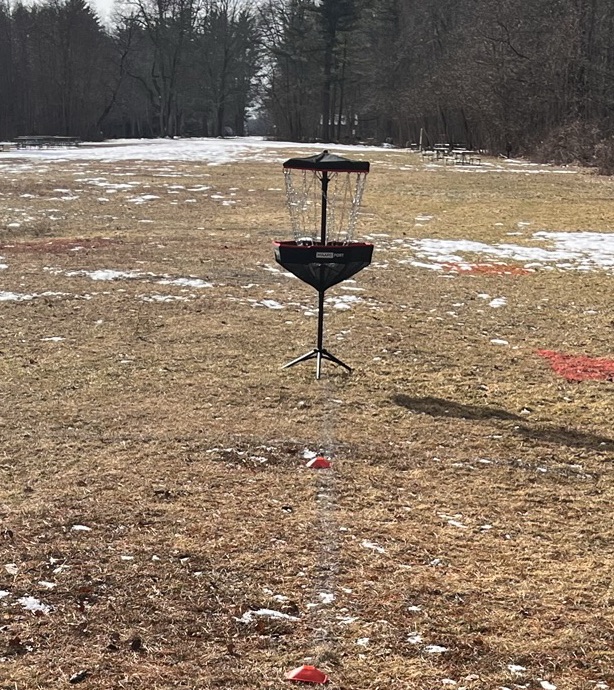
I set up putting distances at 10, 15, 20, and 25 feet. I then threw ten putts with each putter at each distance, mixing up which putter I used first to avoid any bias. I carefully recorded whether each putt went in or not.
The Results:
Here’s what happened:

The Analysis (aka the nerdy part):
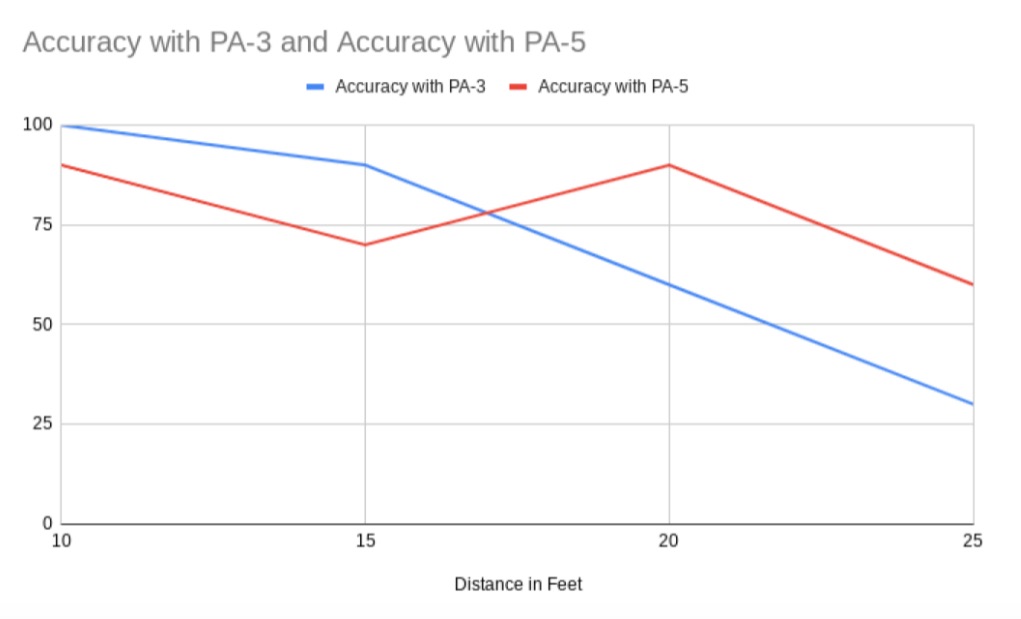
Looking at the numbers, the PA-3 seemed a bit better at 10 and 15 feet. But surprisingly, the PA-5 did better at 20 and 25 feet! However, to know if these differences were just random chance or actually meaningful, I had to do some statistical tests (specifically, a paired t-test). And guess what? The results weren’t statistically significant. Basically, this means the differences we saw could very easily have just happened randomly.
The Conclusion:
My initial hunch was wrong. At these closer distances, stability doesn’t seem to make a huge difference in putting accuracy. While the PA-3 was a tad better at the short range, it wasn’t by enough to be sure it wasn’t just luck. At the longer ranges, the PA-5 did better, but again, not significantly. This suggests that other things like a smooth release and good aim are probably more important than subtle differences in stability, at least at these distances.
What does this mean for your putting game?
If you’re struggling with your putts, especially at shorter distances, don’t get too hung up on whether no B your putter is perfectly stable or understable. Focus on your technique: a clean release, consistent aim, and smooth stroke. These fundamentals likely matter more than the subtle differences between putters, especially inside the circle. That said, personal preference is important. If a certain putter feels better in your hand, that confidence can be just as important as the disc’s flight characteristics!
What’s next?
This experiment was just a starting point. More testing with more disc golfers and even more precise measurements would give a clearer picture. It would also be interesting to see how different putting styles (push putt vs. spin putt) interact with putter stability. Stay tuned for more disc golf science!
View the full lab report here:
 Blue Jay Disc Golf - Flight Science
Leave a comment